



Key Takeaways
Traditional BMS systems struggle to meet modern demands for portfolio-wide insights and efficiency, and the costly “rip-and-replace” approach is not a viable solution. A layered, IoT architecture is the practical path forward. Zenatix’s non-intrusive IoT solution acts as an intelligent overlay, extending your existing BMS to provide deep analytics, advanced diagnostics, and a unified view of all your assets. This approach protects your initial investment while future-proofing your operations.
A Building Management System (BMS) is a cornerstone of modern facilities, providing the essential controls and safety protocols that keep critical assets running smoothly. However, as the demand for automation, sustainability, and efficiency grows, the limitations of many legacy BMS systems are becoming clear.
The problem isn’t that the BMS is flawed—it’s that it was never built to provide real-time asset control and automation, portfolio-wide analytics, and predictive insights now demanded by modern businesses.
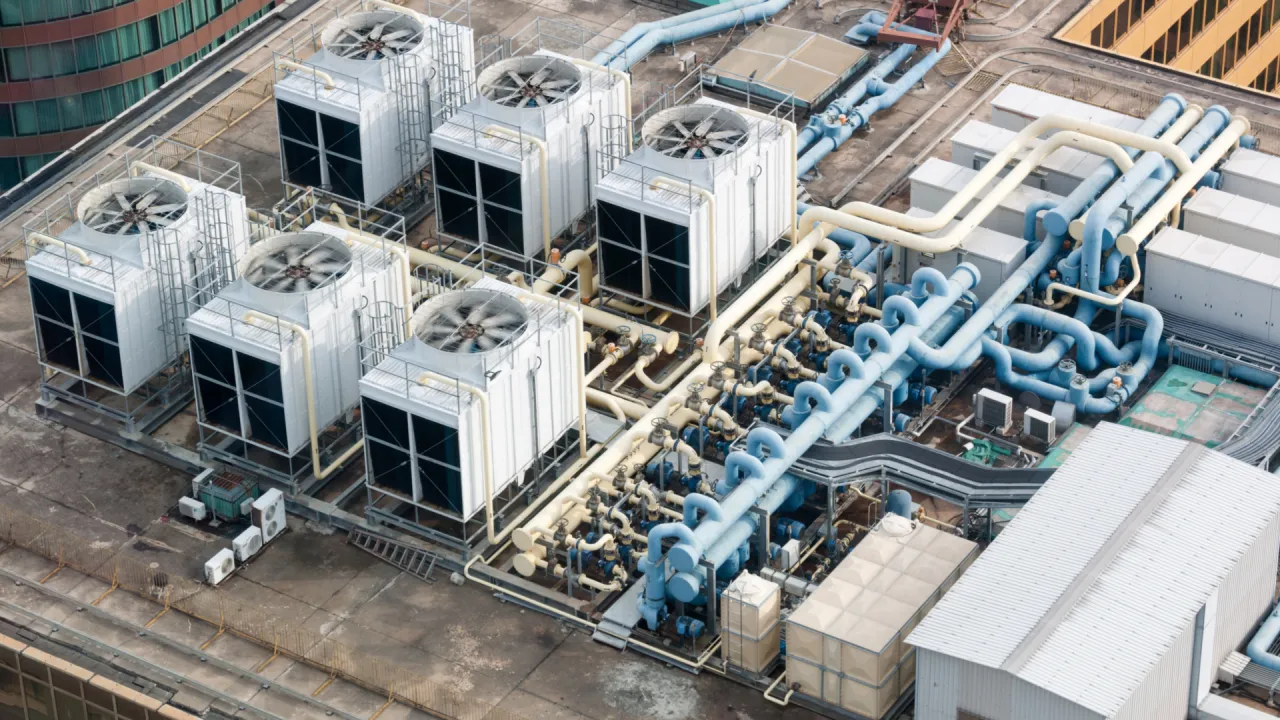
While new buildings are designed with smart systems, the majority of commercial and industrial spaces still rely on older, proprietary BMS technologies that are costly and difficult to upgrade. The traditional “rip-and-replace” approach is often not a viable option due to high capital costs, significant downtime, and operational disruption.
This article explores a more practical and efficient path forward: retrofitting existing BMS infrastructure with a non-intrusive IoT overlay. This layered architectural approach allows you to unlock the full potential of your building data without the pain points of a complete system overhaul.
Technical Constraints of Traditional BMS
A typical BMS architecture is defined by its closed-loop, hierarchical structure. Field devices (sensors, actuators, controllers) communicate with a central server using proprietary protocols like BACnet or Modbus. While effective for basic control and monitoring, this architecture presents several challenges:
- Proprietary Vendor Lock-in: The control logic, points, and configurations are often locked behind vendor-specific tools and APIs. Accessing granular data for external applications is a complex and often manual process.
- Data Silos: Data from different systems (HVAC, lighting, security) are isolated, making integrated analysis difficult.
- Limited Scalability: Adding new devices or features often requires significant system-level changes.
- Lack of Interoperability: Proprietary protocols restrict data sharing with external applications or cloud platforms.
- No Centralized View: It’s difficult to get a unified, real-time view of portfolio-wide operations and energy consumption.
Here is a visual representation of BMS architecture:
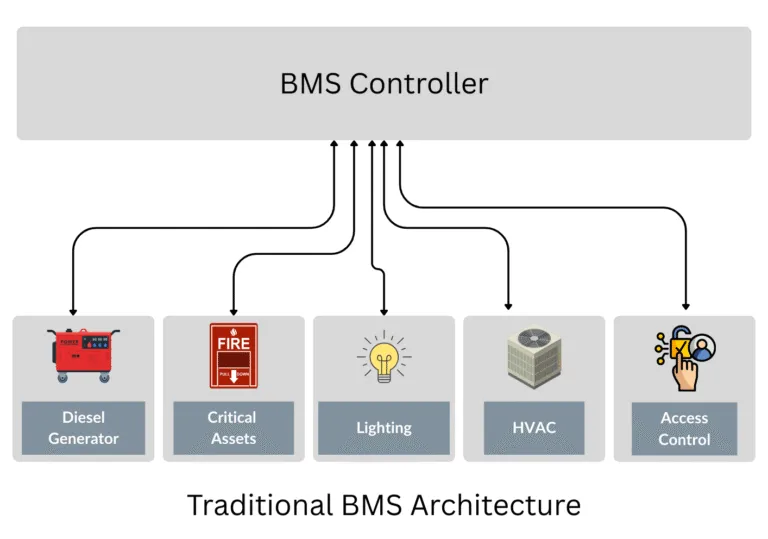
The challenge lies in the fact that this data remains trapped within the local network. It’s difficult to get a complete picture of performance across an entire portfolio of properties.
Why Does a Layered Architecture Just Make Sense?
A layered architecture is a practical, non-intrusive way to add modern capabilities on top of your existing BMS. Let’s look at some of the benefits of implementing a layered architecture:
- Protect Your Investment: You’ve already invested heavily in your BMS. This strategy lets you leverage that infrastructure for years to come, avoiding the immense cost and downtime of a full replacement.
- Scalability and Future-Proofing: Easily add new sensors, devices, or buildings to your network. The open architecture of the IoT overlay ensures you are not locked into a single vendor’s ecosystem, allowing you to integrate future technologies seamlessly.
Unlock Full Potential with Zenatix’s IoT Solution
The Zenatix IoT solution is a protocol-agnostic, non-intrusive data extraction layer that sits on top of current building infrastructure.
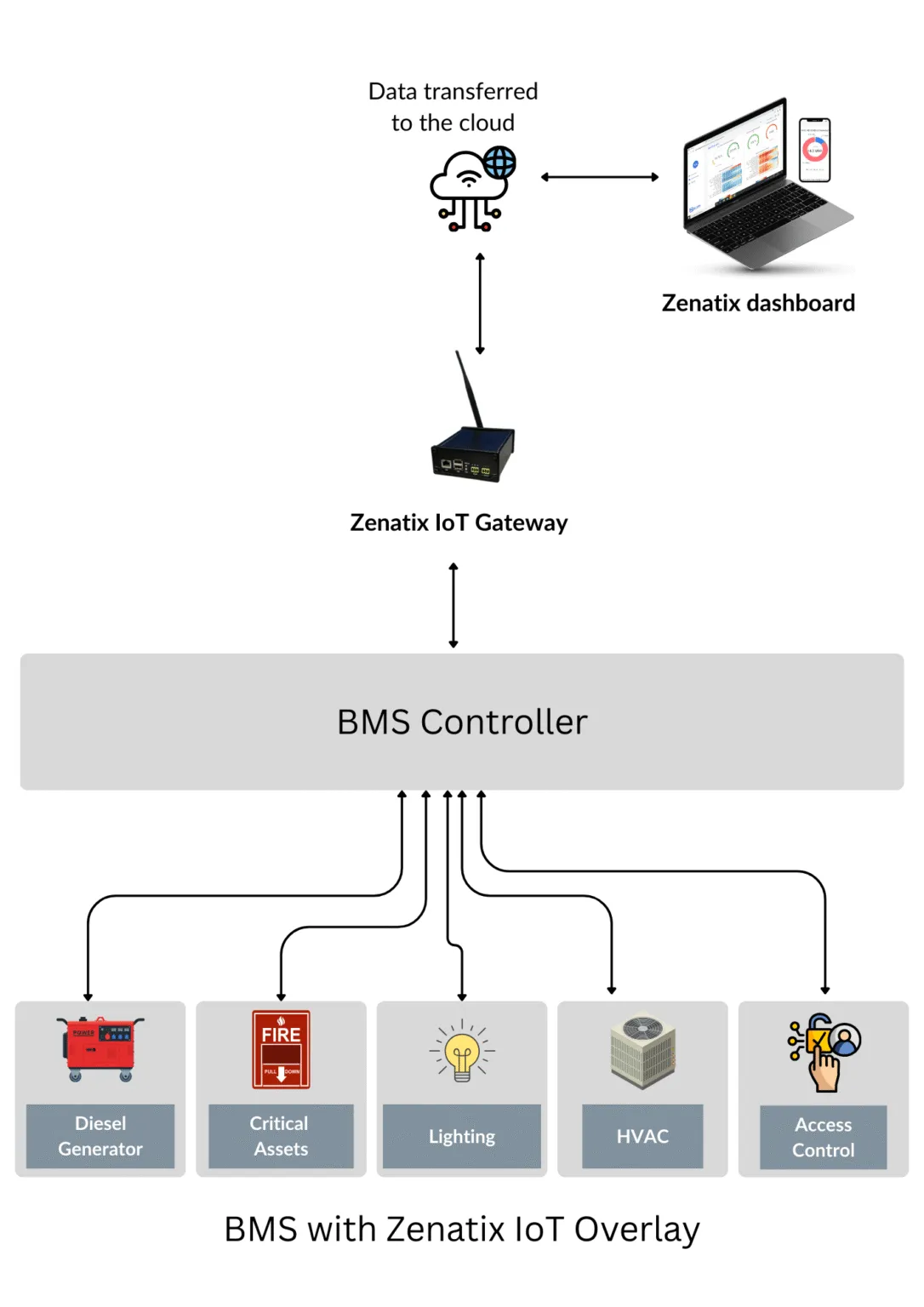
The architecture is a clean, three-tiered system:
- The Edge Gateway (The Zenatix Bridge): This is the core of the solution. The gateway is a powerful computing device designed for industrial environments. Its primary function is to act as a universal translator.
- At the edge, the gateway performs critical pre-processing. It normalizes data, applies a unified timestamp, and buffers data locally during network outages, ensuring data integrity and continuity.
- The Communication Layer: Data is transmitted from the edge to the cloud via a secure, encrypted channel (TLS/SSL). This ensures that sensitive operational data is protected in transit.
- The Cloud Analytics Platform: This is a sophisticated, microservices-based platform. It’s not just a dashboard; it’s an end-to-end data pipeline.
- Time-Series Database: Raw data is ingested into a highly performant database optimized for time-series data.
- Semantic Layer: The platform creates a unified data model, allowing you to compare and analyze data across multiple buildings and equipment types, regardless of their original nomenclature.
- Analytics Engine: It runs advanced algorithms for Fault Detection & Diagnostics (FDD), Predictive Maintenance, and energy baselining, providing insights that are impossible to derive from raw BMS data alone.
Benefits of Integrating Zenatix’s IoT solution with Current BMS
Integrating IoT with your existing BMS creates a more advanced, flexible, and scalable system for managing your building.
- Enhanced Analytics and Visibility: Break down data silos and gain a unified view of your entire portfolio. Zenatix’s platform provides deep, granular insights into energy consumption, equipment performance, and maintenance needs that a traditional BMS cannot offer.
- Fast, Low-Risk Deployment: Because the system is non-intrusive, it goes up quickly with zero disruption to daily operations, so you start seeing results and savings sooner.
- A Unified View: The overlay consolidates data from all your systems and properties into one simple, centralized dashboard. You no longer have to log in to separate systems to understand what’s happening across your portfolio.
- Future-Proofing Building Operations: IoT-integrated systems can easily adapt to evolving regulations and new energy technologies. They allow you to add new sensors and control algorithms and enable software updates without needing new hardware. This keeps your building’s operations current with emerging standards
Schedule a meeting with our experts to discuss how we can transform your building into a truly smart and data-driven asset.
.jpg)